
In May 2025, I made my theater debut as Maima in The Black Theater Troupe of Upstate NY’s production of ECLIPSED by Danai Gurira. Before then, I had never acted before. At least not in my teen or adult years. The last time I got on stage to act was during school assemblies or end-of-year prize-giving ceremonies over 16 years ago. Embarking on this new journey gave me a newfound respect for stage actors, but also a profound look into how theater can be used to educate and move people in a way that is different from other mediums such as film, studio art, or music.


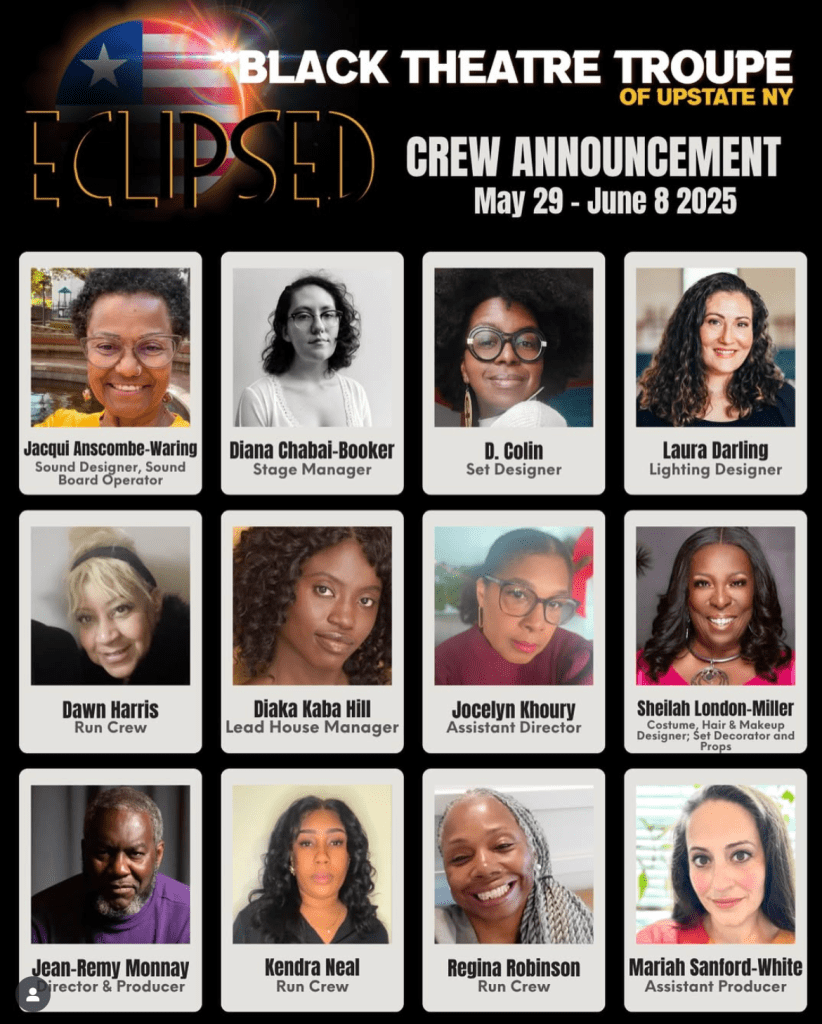
Right: Cast announcement + Left: Crew announcement
The experience gave me a chance to consider the business of theater. It’s common knowledge that the arts are underfunded and underappreciated and stage actors seldom achieve superstardom. When people think about theater, the first thought is “BROADWAY”, the strip of 41 stages in New York City. Beyond that, is off-Broadway, off-off-Broadway, off-off-off-Broadway, with every “off” indicating how much smaller the theater is. In different cities around the world, including where I am in Albany, NY some of the more successful shows will come to a big theater with a broadway style production for a very short run before shipping out to another city to do the same thing.
What happens to actors/artists who don’t make it on the big stage? Or, a better, more nuanced question is: what about some of the performers who are not part of the union, the Actors’ Equity Association? Many of them end up in regional theaters, or if they are newbies like me, community theaters. If you squint a little harder and look at the entertainment landscape in your city, you’ll notice a collective of people, or multiple collectives of people, putting on theater performances in your area.
Most community theater are non-profits with the cast and crew as volunteers, and all proceeds raised from performances are reinvested to support the production of upcoming shows. It’s one thing to gather people to act, but it’s another process entirely to look for work you want to realize on the stage. For small community theaters across the country, they have to license the plays because, of course, the brilliant writers behind that work are entitled to fair compensation for their intellectual property. What I didn’t know is that the payment is not a say, negotiated lump sum, but rather the production company pays for the rights per show, in some cases, per seat. In some cases, actors have to give their scripts back to the production team to send back to the licensing company. So, for the “struggling artist” community theater is a great place for exposure and experience, and, unless you’re in a well-funded theater, compensation shouldn’t be the defining factor in whether you choose to do it.
When I said yes to the role of Maima, compensation was the last thing I considered. Maybe because at the time, I felt like I had nothing to offer other than energy, enthusiasm and an insane work ethic that would ensure I do my very best. I mean, if money was on the table, some other experienced local artists would probably be more incentivized to say yes. Don’t get me wrong, there are plenty of talented local veterans in shows at small theaters and production companies. However, over time, I realized that many of the people who work on BTTUNY’s productions and other smaller stages are driven by their missions. The collectives exist to tell stories that far too often aren’t considered by artistic directors of theaters and production houses that have significantly more funding. It’s an opportunity to give BIPOC actors, many of whom never knew they had any talent in this realm, a chance to explore and grow some wings (ask me how I know).
Anyway, let’s go back to the beginning of how this journey. To this day, it still blows my mind that I was able to be part of the production. The director and I have a mutual friend who invited us to lunch. At the time, I expressed my excitement at coming to what was going to be the production and congratulated him on BTTUNY’s very successful run of Once on This Island by Lynn Ahrens. Two days later, he called asking me to read the script for a conversation in a few days. Obliviously, I read it thinking maybe he would ask me to be on the crew as an Africa expert or try connecting the play to more members of the community. After taking in Gurira’s amazing writing and character development, I was ready for our call. As he asked me if I was interested, I could feel my mind turn cloudy with all the things that were getting ready to go terribly wrong with this. Then the most incredible thing happened, I could see in that moment a confrontation I had recently had with someone I was close to, and they were calling me a “drama queen” for expressing some concerns I had playing vividly in my head. Before I knew it, the “yes” had left my lips, and I sat staring blankly at the wall for the decision I had just made.
I want to give a big thanks to the cast and crew. Other than being phenomenal artists, they are just wonderful humans.
As a newbie, there was so much I did not know. Starting off with the fear of how I was going to memorize my lines. When the director said, “We will start blocking act one”, I didn’t know what that meant. I didn’t know the terms ‘on-book’ or ‘off-book’, the role of a stage manager, or what one does at a tech rehearsal, or what a ‘strike’ is. Everyone was so patient with me and gave me tips on crafting the character. I did a ton of research on the archetype of women who inspired my character. I was reading my script like crazy, taking it with me everywhere until the very last performance.
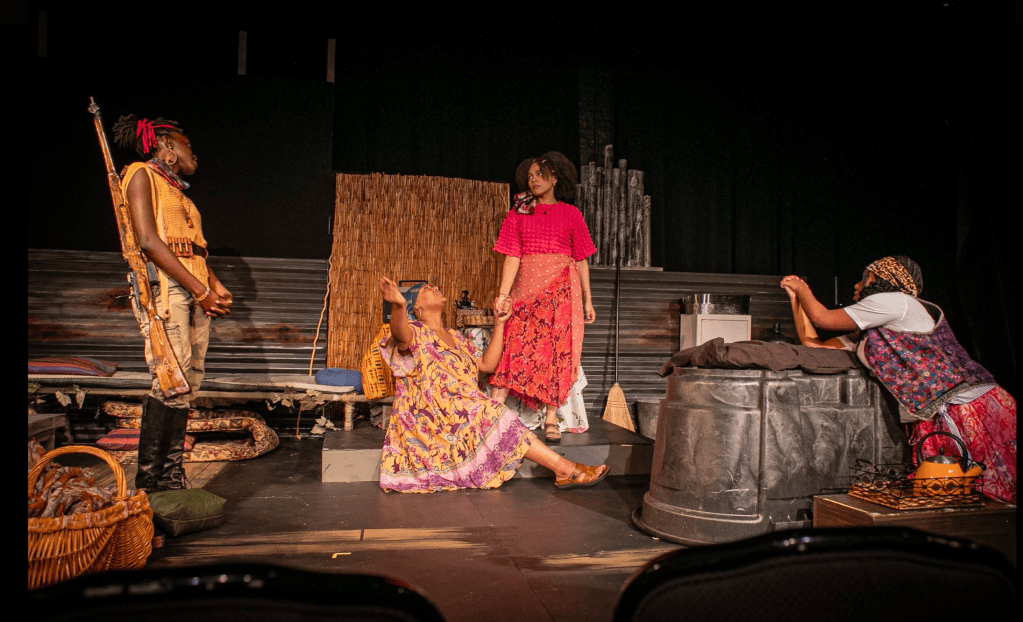
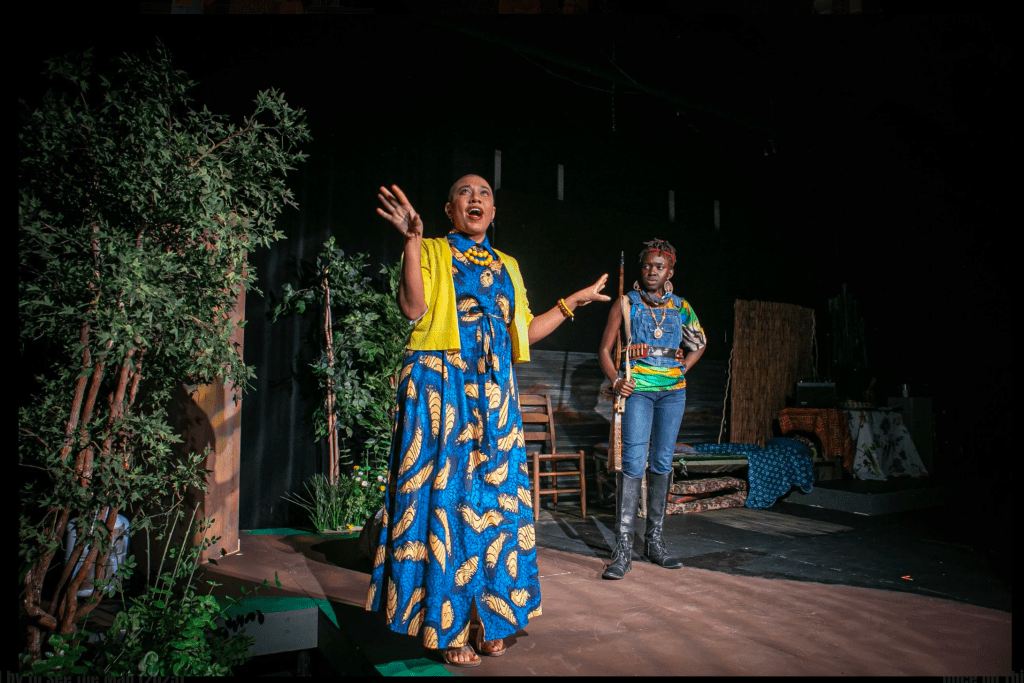
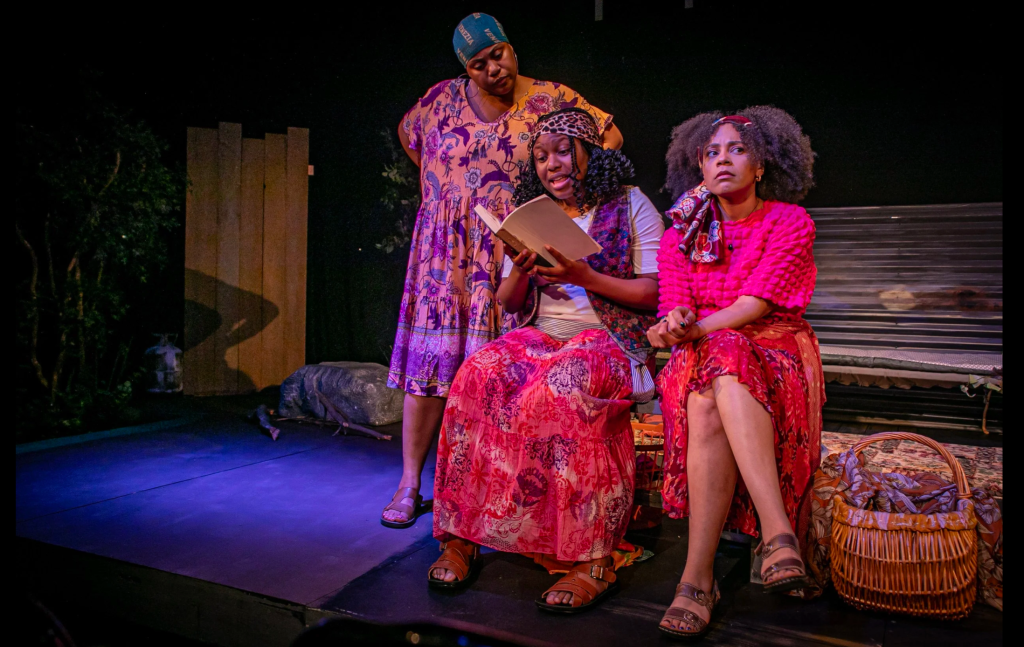

From the reactions, I think people really liked enjoyed our performance. Here is a review from Berkshire Stage’s Paula Kaplan-Reiss. I am very proud of this work and glad to receive this reaction from people who have been ‘grading’ plays, as well as from my loved ones. A beautiful part of being part of this production was an opportunity to invite people from different areas of my life to share in a very significant moment with me. My best friends from college and study abroad made the trip, friends I watch soccer with most weekends even though we are on rival teams, co-workers turned friends from a job I worked five years ago, friends from latin dancing and drumming, my family, the executive director and other board members from nonprofit I volunteer + serve on the board for…the list of connections was endless. Coming out of the dressing room and seeing people I love out there was such a fantastic treat. If any of you are reading this, I love you so much, and I’m so thankful to have you in my life. <3
Will I do this again? People have been asking me, and I had been asking myself too. Well, we’re all in luck I guess. A few weeks ago, I was cast as ‘Elizabeth’ for the Schenectady Civic Players production of In the Next Room (or the vibrator play) by Sarah Ruhl. The show will run from January 30 to February 8th. I am excited get on the stage again. So far, the team dynamics is different but they have been great professionals to work with.

In today’s offering, I share with you a video of a dedication during one of ECLIPSE’s runs on Broadway featuring one of my personal heroes, Nobel Laureate Leymah Gbowee. At its core, this is a play about humanizing victims of war and showing the complex relationships that exist, especially among women. There is so much I could say about this play, but at this time it’s a conscious choice not to. I don’t want to do too much and spoil it, or say more than I am supposed to. Anyway, I hope this can, in some ways, inspire you to give the show a chance if it comes to a place near you.
That said, if you are a lover of the arts, honestly even if you are not. I hope you consider making a donation to your local community theater today. Or you can also show up their amazing season of shows.
Thanks for reading!
Until next time,
Zilpa
 Villager'z Paradise
Leave a comment